Easy, rigid, accurate — the indoor default
PLA 3D printing
PLA (polylactic acid) is the material most 3D prints are made of, and for good reason: it prints accurately, holds sharp detail, comes in every colour imaginable and costs the least. It is stiffer than PETG — people are often surprised by that — and for anything decorative, indoor and away from heat, it is usually the right answer. Its weakness is not strength; it is temperature and time.
- Softens from
- ~55–60°C
- Character
- Stiff, slightly brittle
- Outdoors
- No — UV and heat degrade it
- Relative cost
- Lowest
Where PLA wins
- The most accurate and detailed of the common materials — crisp corners, clean text, minimal warping
- Very stiff: resists bending under light loads better than PETG
- Cheapest per part and quickest to print well
- Huge colour range, including silks and wood-fills for display pieces
- Low-odour, plant-derived, and the easiest material to print sustainably
Where it lets you down
- Softens from around 55–60°C — a parcel shelf or hot car will slump it
- Creeps under sustained load: a clamped or tensioned PLA part slowly deforms and stays deformed
- Brittle failure: it snaps rather than bends, so clips and snap-fits break sooner
- UV and weather chalk and weaken it within a season outdoors
What gets printed in PLA
- Prototypes and form checks before committing to a tougher material
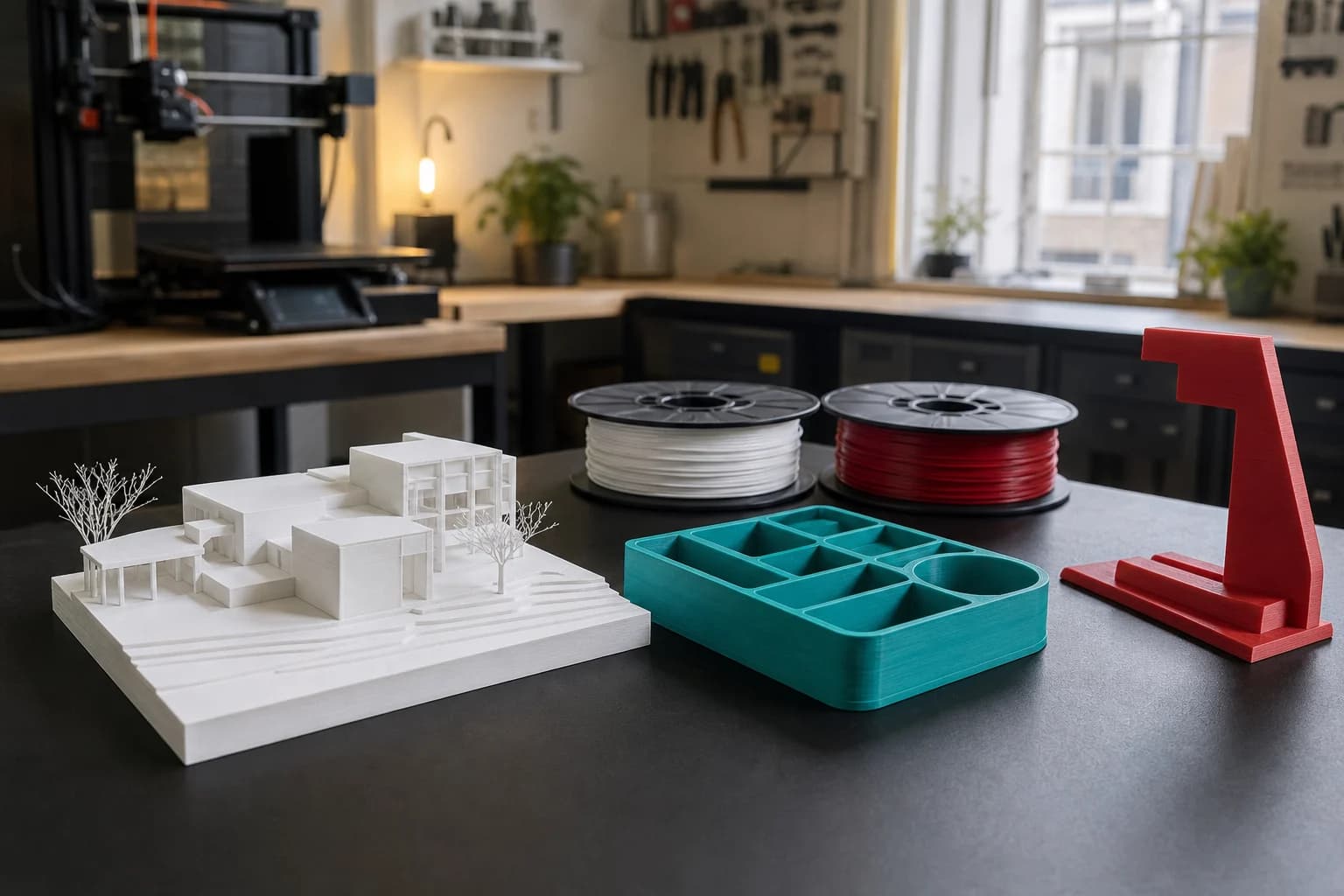
- Display models, architectural models, cosplay parts that stay indoors
- Organisers, trays, desk fittings, decorative covers
- Jigs and templates used at room temperature
When to choose something else
Skip PLA when the part lives in a car, a shed, a bathroom that runs hot, or outdoors — PETG or ASA take those. Skip it for clips that flex daily (PETG), anything under constant clamping load (PETG or nylon), and any part whose failure would matter. PLA is for parts that are looked at and handled, not worked hard.
How it prints — and why that shows in the price
PLA is the easiest material to print, which is why it is the cheapest to have printed: fewer failures, faster speeds, no enclosure needed and supports come away cleanly. Fine detail and overhangs come out better in PLA than in anything else we run.
Get a part quoted in PLA
Upload a file for a guide price in seconds — or describe the part and where it lives, and we will confirm the material choice with the estimate.