Production facts
What we can print, and where FDM stops
3dp6 makes one-offs and short runs in thermoplastic. These are working ranges, not blanket guarantees: geometry, material and orientation decide what a particular part can achieve.
- Largest nominal build envelope
- 340 x 320 x 340 mm
- Process
- FDM thermoplastic printing
- Typical small-feature accuracy
- Around +/-0.2 mm
- Direct estimate formats
- STL, OBJ and 3MF
- Straightforward jobs
- Usually a few days, confirmed per job
- Review
- Human check before final quote
Materials
Material is selected around heat, UV, impact, flex and the way the part is loaded. We recommend one when you are unsure.
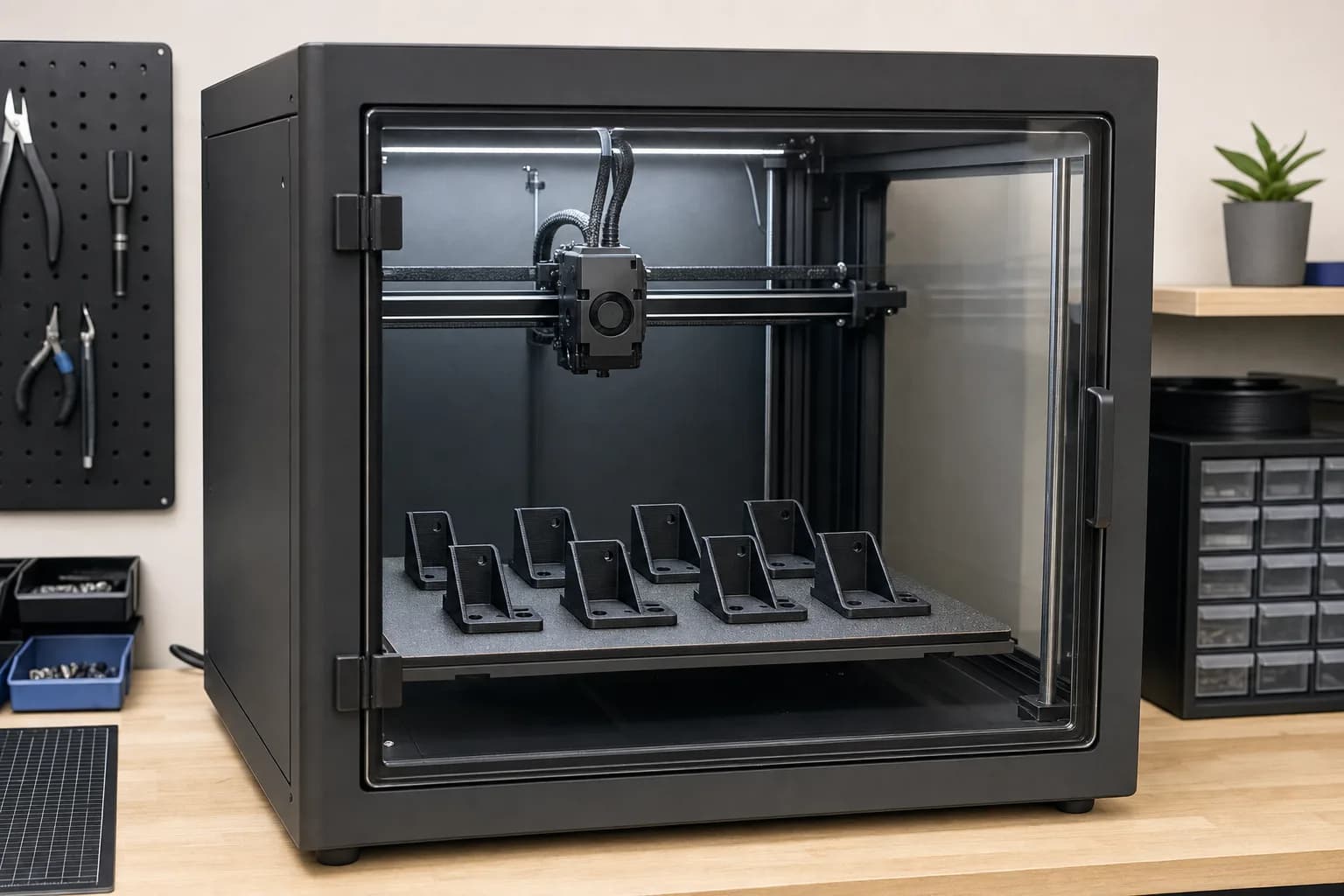
Enclosed, heated-chamber machines support PLA, PETG, TPU, ABS, ASA, PC, nylon and suitable fibre-filled blends. See the equipment detail and material guide.
Size, fit and finish
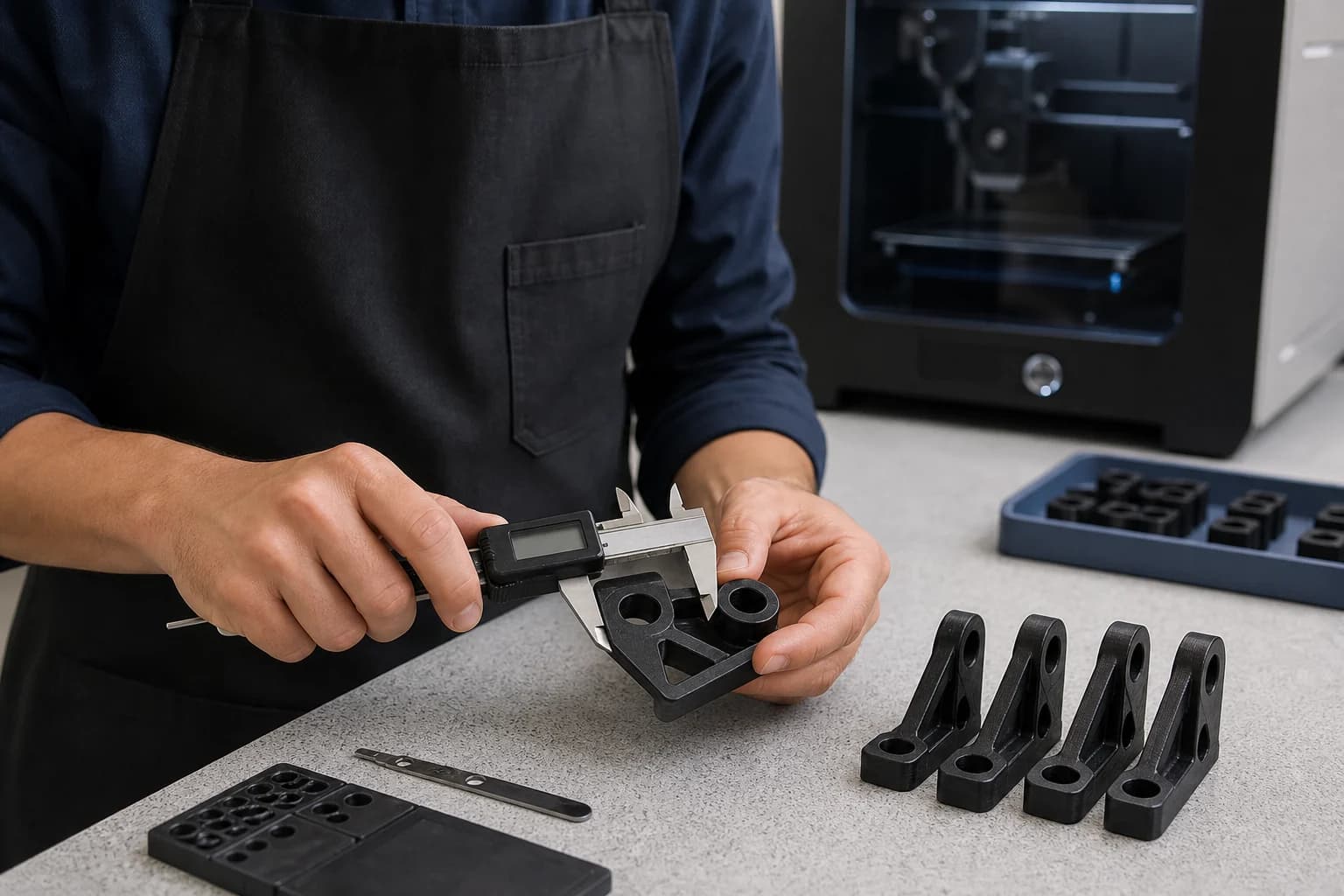
The largest nominal single-nozzle build envelope is 340 x 320 x 340 mm. A real part may need margin for a brim, supports or a stronger orientation, and larger designs can sometimes be split and joined. On ordinary small features, around +/-0.2 mm is a realistic starting point; larger parts can drift to +/-0.5 mm or more.
Critical fits should be named on the enquiry. A small fit coupon is usually better evidence than promising a tolerance across an untested geometry. Layer lines remain visible unless finishing is quoted separately.
Read the tolerance and clearance guideGood fits for the process
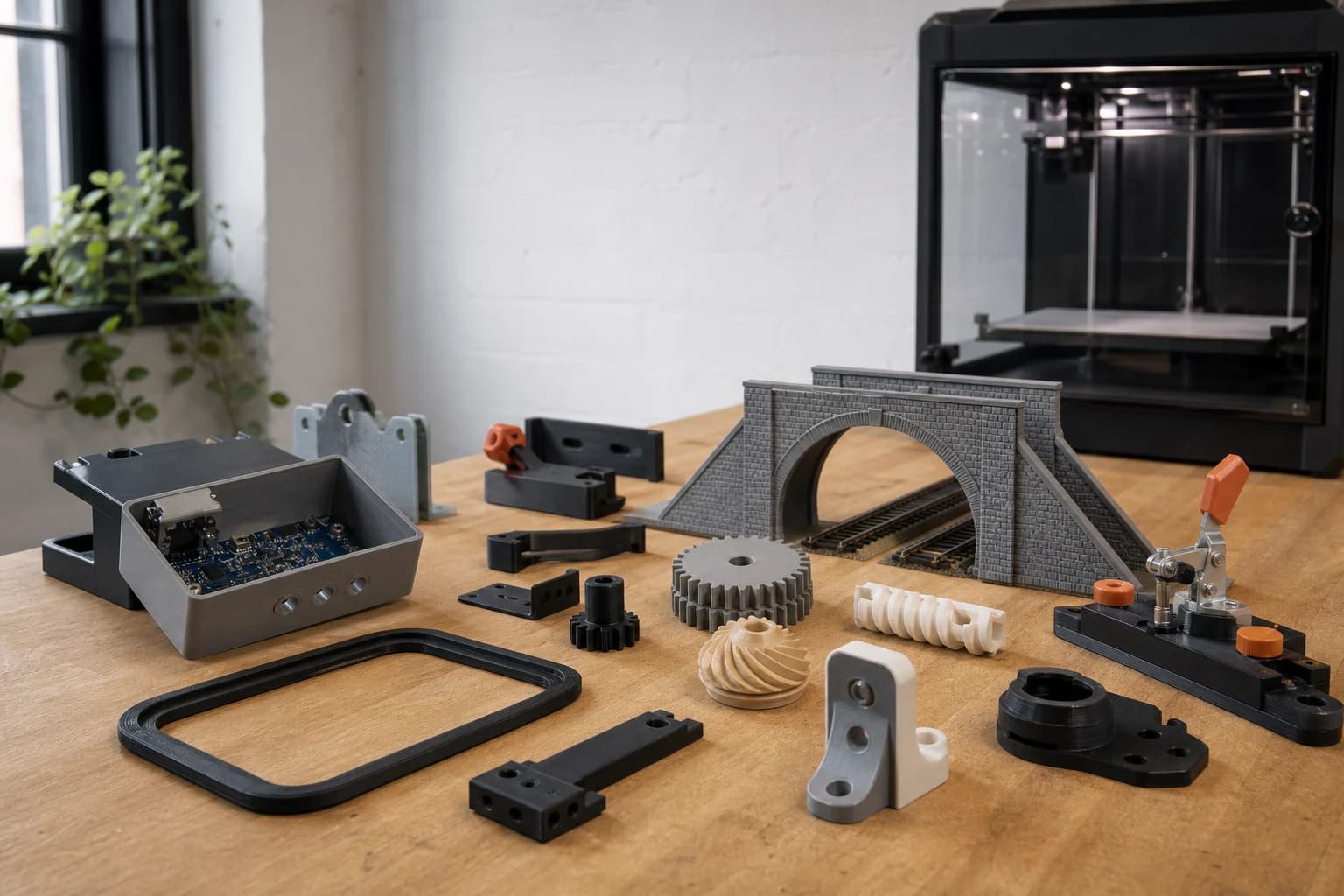
- Functional prototypes and iteration parts
- Replacement plastic parts where printing is suitable
- Brackets, mounts, spacers, adaptors and enclosures
- Jigs, fixtures and workshop aids
- Tabletop, model railway and hobby parts
- Short production runs where tooling is not economical
Work we decline or redirect
- Safety-critical, pressure-retaining or certified structural parts
- Metal, resin or scanned-part work
- Precision fits tighter than the FDM process can hold
- Large production runs better suited to injection moulding
- Copyright, trademark or design-right infringement
- Parts whose failure could cause injury or serious damage
Files and turnaround
STL, OBJ and 3MF files can produce an immediate geometry-based guide price. STEP/STP and ZIP files are accepted for manual review. Straightforward work from a clean file is normally measured in days, not hours; design, repair, finishing and the current print queue can add time. The final quote confirms the expected dispatch window before work starts.
Check a real part
Upload geometry for a guide estimate, or describe the part and the dimensions that matter.