Engineering strength for parts that earn it
Nylon & carbon fibre 3D printing
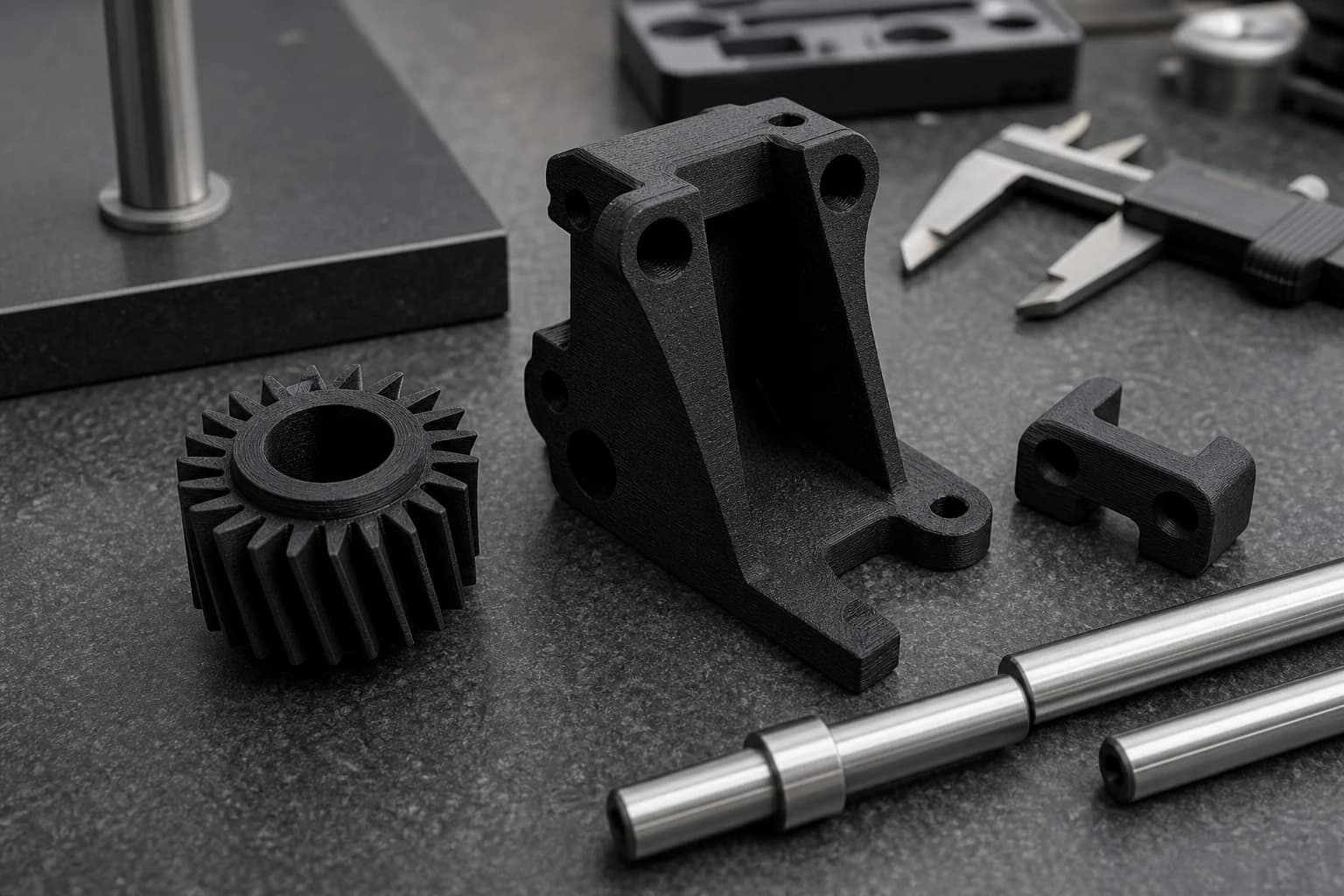
Nylon (polyamide) is where 3D printing stops making stand-ins and starts making engineering parts. It is tough in the way that matters — it absorbs impacts and abrasion that crack or chew every material above — and carbon-fibre-filled nylon adds the stiffness plain nylon lacks. Gears, latches, brackets under real load, wear pads, and replacement parts for machinery that must simply not break again: this is their territory. It is also the most expensive material we quote, so it should be chosen because the job demands it.
- Working temp
- ~100–120°C
- Character
- Tough; CF adds stiffness
- Outdoors
- Good, with pigmented grades
- Relative cost
- Highest
Where Nylon & carbon fibre wins
- The toughest common printing material: impact, fatigue and abrasion resistance the others cannot match
- Works at temperatures around 100–120°C depending on grade
- Naturally slippery — good for gears, bushings, slides and living hinges
- CF-filled grades are markedly stiffer and more dimensionally stable, with a handsome matte finish
- Chemically resistant to oils, fuels and most workshop fluids
Where it lets you down
- The priciest option — material cost and demanding printing both show in the quote
- Absorbs moisture aggressively; poorly-dried nylon prints weak and ugly (ours is dried, but it matters to mention)
- Plain nylon is flexible in thin sections — sometimes you want that, often you don't (CF fixes it)
- CF grades are stiffer but more brittle than plain nylon, and abrasive to print
What gets printed in Nylon & carbon fibre
- Gears, sprockets, pawls and ratchets for real drives
- Machine spares: latches, levers, cam followers, wear plates
- High-load brackets and mounts, including under-bonnet where sensible
- Jigs and fixtures that see daily workshop abuse
When to choose something else
Most parts never load a material hard enough to need nylon — PETG at three walls does the everyday job at a fraction of the price. If the part is decorative, nylon is pure waste. And when the application is genuinely safety-critical — braking, lifting, climbing, pressure — the honest answer is not better plastic; it is metal, and we will say so at quote time.
How it prints — and why that shows in the price
Nylon demands dried filament, high temperatures and an enclosed machine, and CF grades wear ordinary nozzles. Prints are priced to reflect that. For load-bearing parts we will usually recommend orientation and wall counts along with the quote, because in nylon those choices are most of the strength.
Worth reading next
Get a part quoted in Nylon & carbon fibre
Upload a file for a guide price in seconds — or describe the part and where it lives, and we will confirm the material choice with the estimate.