The tough all-rounder for functional parts
PETG 3D printing
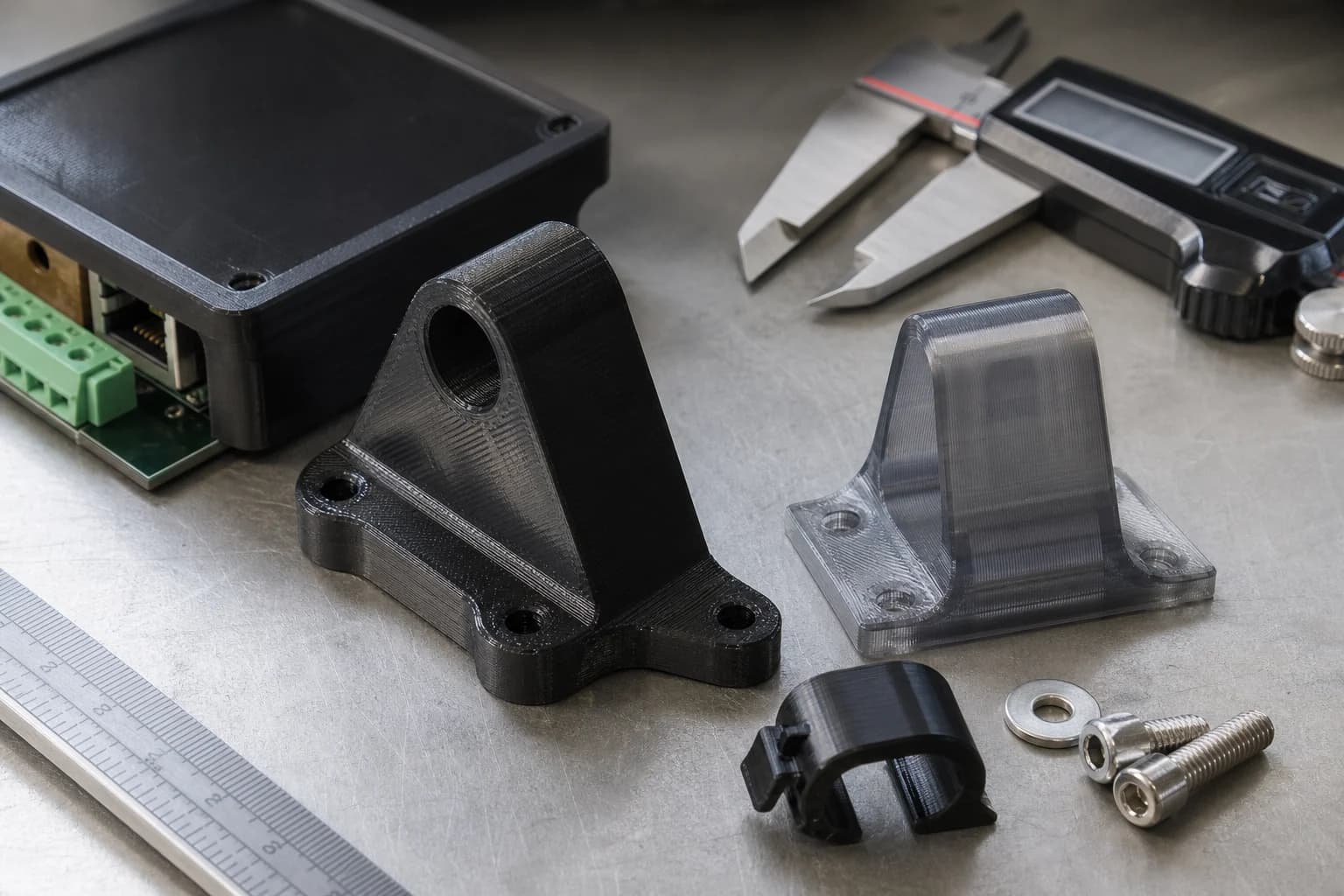
PETG (glycol-modified PET, the same family as drinks bottles) is what we quote when someone says "it just needs to work". It gives up a little of PLA's crispness in exchange for the property that matters on functional parts: toughness. Where PLA snaps, PETG flexes and comes back. It handles damp, garden-shed temperatures and everyday knocks, which covers most of what people actually need printed.
- Softens from
- ~75–80°C
- Character
- Tough, slightly flexible
- Outdoors
- Sheltered spots, yes
- Relative cost
- Low
Where PETG wins
- Tough rather than brittle: clips, brackets and snap-fits survive being used
- Layer bonding is among the best of any material — parts are strong in every direction
- Handles ~75–80°C, comfortably ahead of PLA's slump point
- Unbothered by water and damp; fine in bathrooms, garages and greenhouses
- Slightly flexible, which lets it absorb shocks that crack stiffer plastics
Where it lets you down
- Less crisp than PLA: fine detail softens and small text loses definition
- Prone to stringing, so intricate models need more cleanup
- Scratches more easily than PLA and shows it on glossy colours
- Long UV exposure still degrades it — sheltered outdoor use, not a south-facing wall
What gets printed in PETG
- Brackets, mounts and hooks that carry real load
- Replacement parts for appliances, garden kit and vehicles' interiors
- Enclosures and housings for electronics
- Anything that lives in a damp or occasionally warm place
When to choose something else
For full sun and weather year-round, step up to ASA. For sustained temperatures past ~80°C — near engines, heaters, hot ducting — you want ASA or nylon. For maximum stiffness on a display piece, plain PLA is sharper and cheaper. And for anything that must flex by design rather than by accident, that is TPU's job.
How it prints — and why that shows in the price
PETG prints reliably but a touch slower than PLA, and supports fuse to it more readily, so heavily-supported geometry costs a little more finishing time. Its forgiving nature makes it the fewest-surprises choice for one-off functional parts.
Get a part quoted in PETG
Upload a file for a guide price in seconds — or describe the part and where it lives, and we will confirm the material choice with the estimate.